Robotic Surgery · Apollo Hospital Gurugram
Da Vinci robotic surgery.
Smaller cuts. Better precision. Faster home.
The Da Vinci Surgical System is available at Apollo Hospital Gurugram. Dr. Nitin Shrivastava - MCh AIIMS Delhi · FRCS Oxford University, England - performs robotic kidney, prostate, and bladder cancer surgery with 10× magnified 3D vision and sub-millimetre precision. 5★ Google · 450+ reviews.
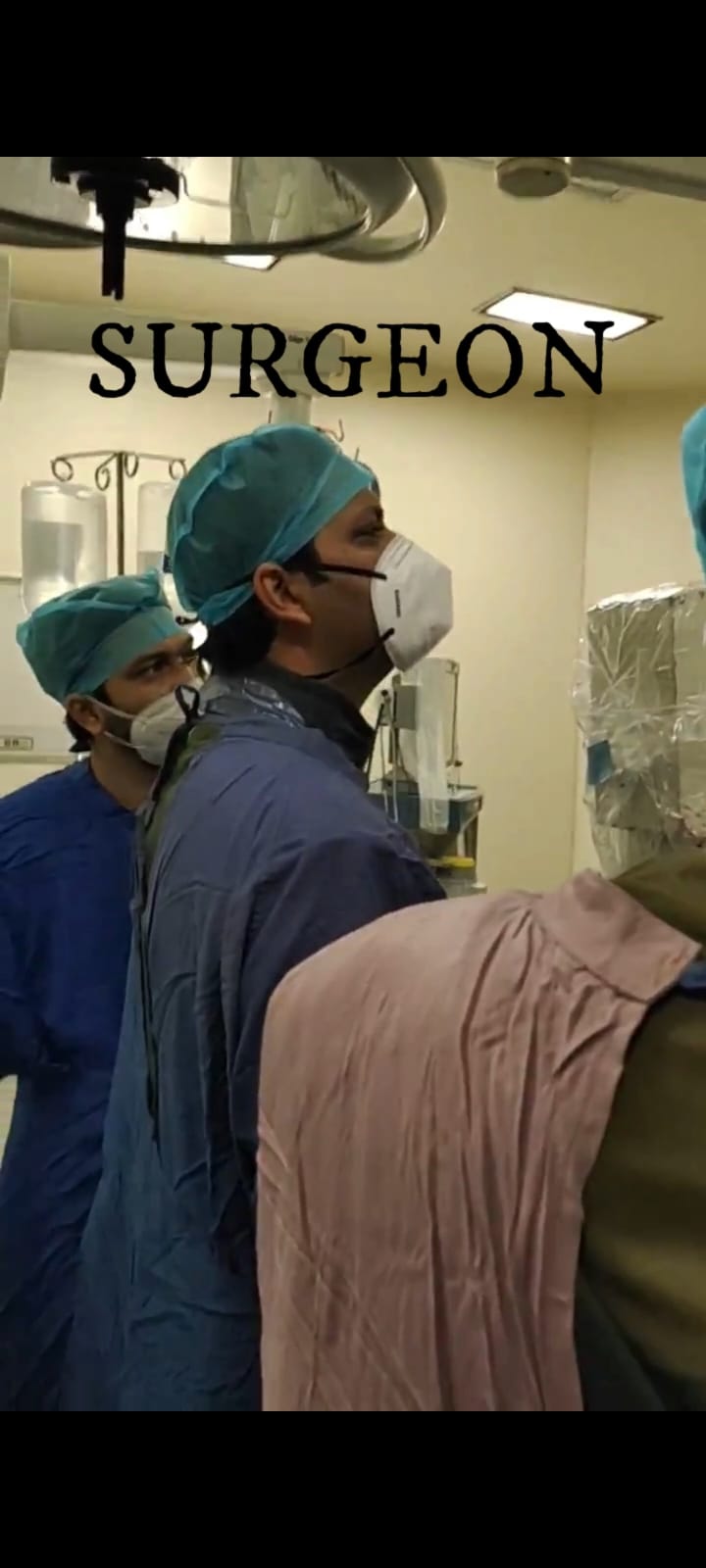
Dr. Nitin Shrivastava performs robotic urological surgery using the Da Vinci Surgical System at Apollo Hospital Gurugram, Sector 26, Gurgaon. Procedures include robotic partial nephrectomy (kidney-sparing kidney cancer surgery), nerve-sparing robotic radical prostatectomy (prostate cancer), and robotic radical cystectomy (bladder removal for bladder cancer). He holds an MCh Urology from AIIMS Delhi and FRCS Urology from Oxford University, England. Contact: +91 78382 86336.
What changes when a robot assists the surgeon
The Da Vinci Surgical System does not operate on its own - it has no autonomy. It is a sophisticated tool that translates the surgeon's movements, made at a console a few feet away, into precise motions at the operative site inside the patient. Think of it as a very high-fidelity extension of the surgeon's hands.
What changes is the quality of what the surgeon can do. Standard laparoscopic instruments - long, rigid, straight - limit the angles and movements available inside the body. Robotic instruments articulate at their tips, rotating and bending in ways the human wrist cannot, reaching angles in confined spaces that laparoscopy cannot access cleanly.
The surgeon operates with 10× magnified 3D vision instead of a flat 2D screen. Tremor - the minor involuntary hand movements present in every surgeon - is filtered out by the system.
For urological cancer surgery, this matters in very specific ways. In prostate surgery, the neurovascular bundles that control urinary continence and erectile function run immediately alongside the prostate. Preserving them while removing the cancer requires the kind of precision that robotic surgery makes reliably achievable. In kidney surgery, the goal of removing only the tumour while leaving the healthy kidney intact is technically demanding - robotic assistance makes it accessible to a wider range of tumour positions and sizes.
How approaches compare
Robotic vs. laparoscopic vs. open surgery
| Feature | Robotic (Da Vinci) | Laparoscopic | Open surgery |
|---|---|---|---|
| Incision size | 4–5 small ports (5–12 mm) | 3–4 small ports | 15–25 cm cut |
| Surgeon's vision | 10× magnified 3D | 2D laparoscopic | Direct 3D |
| Instrument range of motion | 7 degrees (wrist-like) | 4 degrees (rigid) | Full |
| Tremor filtration | Yes - system filters | No | No |
| Blood loss | Very low (often zero transfusion) | Low | Moderate–high |
| Hospital stay | 1–3 days (procedure-dependent) | 1–3 days | 5–10 days |
| Return to desk work | 2–3 weeks | 2–4 weeks | 6–8 weeks |
| Nerve preservation | Best (precision dissection) | Good | Good (in expert hands) |
| Cost | Higher (covered by most insurance) | Moderate | Lower |
Open surgery remains the right choice for certain large tumours, complex anatomy, or prior extensive abdominal surgery. Dr. Nitin will recommend the approach that best fits your specific situation.
Robotic procedures available
What Dr. Nitin performs robotically at Apollo Gurugram
Robotic Partial Nephrectomy
Kidney tumour · Nephron-sparing
Removes only the kidney tumour while preserving the healthy remaining kidney. For tumours typically under 7 cm and in a favourable anatomical position. Warm ischaemia time (period of clamping) is minimised with robotic technique.
- Hospital stay: 2–3 days
- Return to work: 2–3 weeks
- Indication: Renal tumour, single kidney, bilateral tumours
Robotic Radical Nephrectomy
Kidney cancer · Complete removal
Complete removal of the kidney for larger tumours or those not amenable to nephron-sparing. Can also include adrenal gland removal and lymph node dissection. Robotic approach dramatically reduces recovery vs. open.
- Hospital stay: 2–3 days
- Return to work: 3–4 weeks
- Indication: Large or centrally located kidney tumours
Robotic Radical Prostatectomy
Prostate cancer · Nerve-sparing
Complete removal of the prostate gland for localised prostate cancer. Nerve-sparing technique preserves the neurovascular bundles responsible for erectile function and urinary continence. Robotic precision makes this reliably achievable in experienced hands.
- Hospital stay: 1–2 days
- Catheter: 7–10 days
- Return to work: 2–3 weeks
Robotic Radical Cystectomy
Bladder cancer · With urinary diversion
Removal of the bladder for muscle-invasive bladder cancer. Urinary diversion (ileal conduit or orthotopic neobladder) is constructed simultaneously. Robotic approach reduces intraoperative blood loss and speeds gastrointestinal recovery.
- Hospital stay: 5–7 days
- Return to work: 6–8 weeks
- Indication: Muscle-invasive bladder cancer
Robotic Adrenalectomy
Adrenal tumours · Phaeochromocytoma
Minimally invasive removal of adrenal tumours. Particularly important for phaeochromocytoma (adrenaline-secreting tumours) where precise dissection and meticulous haemostasis are critical. Robotic approach offers superior access to the adrenal fossa.
- Hospital stay: 1–2 days
- Return to work: 2 weeks
- Indication: Adrenal tumour, phaeochromocytoma, ACC
Robotic Pyeloplasty
PUJ obstruction · Reconstructive
Repair of the pelvi-ureteric junction (PUJ) obstruction - where the kidney-ureter junction is narrowed, causing urinary back-pressure. Robotic technique allows precise reconstruction in a deep anatomical space. Excellent long-term success rates.
- Hospital stay: 1–2 days
- Return to work: 2–3 weeks
- Indication: PUJ obstruction (primary or secondary)
Why patients choose Dr. Nitin for robotic surgery
Patient experience
Robotic prostatectomy - back to work in three weeks
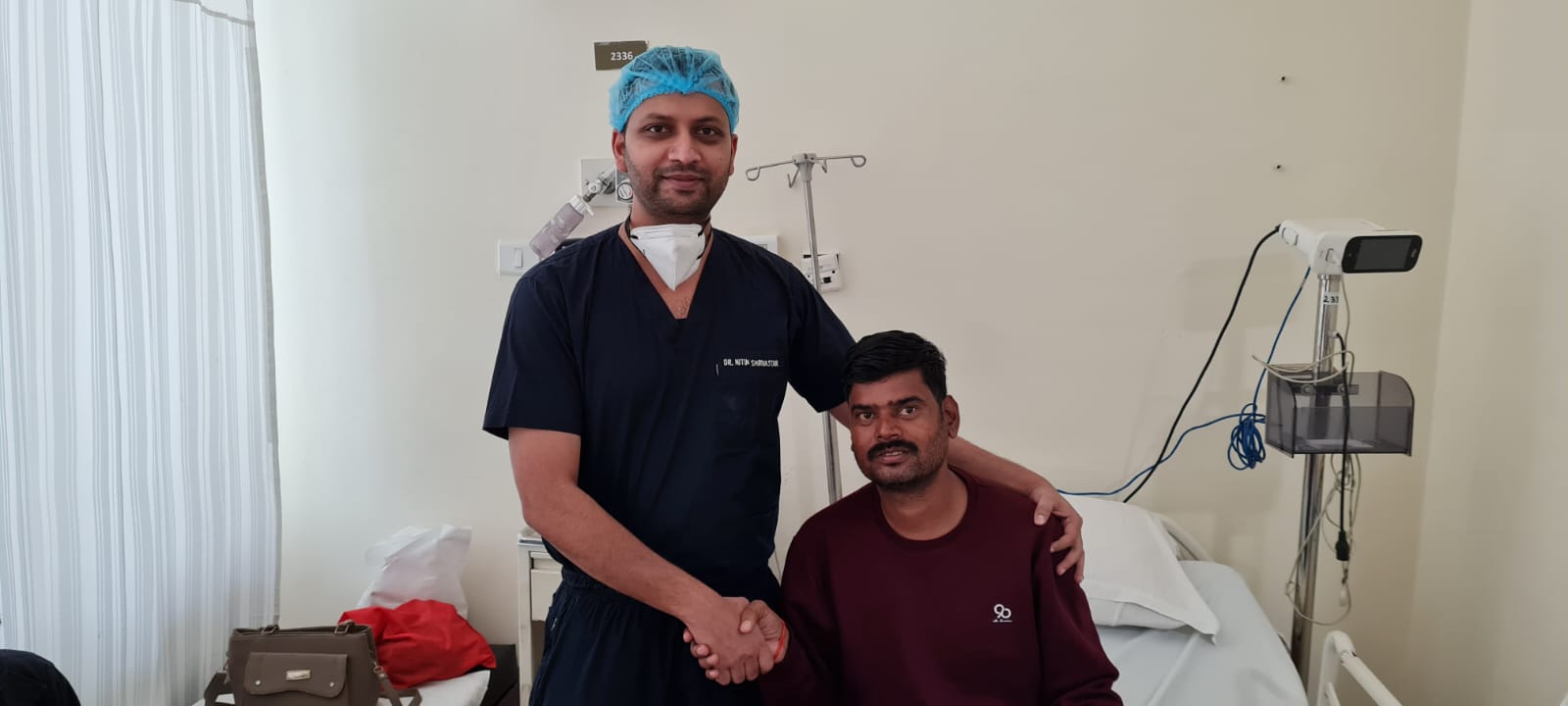
"When my PSA came back at 14 and the biopsy confirmed cancer, my family wanted to go abroad for surgery. My son researched and found Dr. Nitin - his training at AIIMS and Oxford, and the fact that he does robotic surgery at Apollo here in Gurgaon.
The surgery itself was on a Tuesday; I was home Thursday. The catheter came out after 8 days. I had some leakage for about three weeks, then it stopped entirely. At six weeks I was back in the office. The PSA at three months was undetectable."
- Patient, 61, prostate cancer · Gurgaon ★★★★★

Your questions answered
Frequently asked questions - robotic surgery
Both robotic and laparoscopic surgery are minimally invasive - they use small incisions and a camera rather than a large open cut. The difference is in the precision and control available to the surgeon. In standard laparoscopy, the surgeon controls long straight instruments directly through the skin, with limited range of movement. In robotic surgery using the Da Vinci System, the surgeon sits at a console and controls robotic arms that hold instruments inside the patient. These instruments articulate at their tips - bending and rotating with seven degrees of freedom, far beyond what the human wrist can achieve. The surgeon also sees the operative field in 10× magnified 3D, compared to a 2D laparoscopic view. This translates into greater precision, finer tissue handling, and better outcomes for complex urological surgery.
Yes. The Da Vinci Surgical System is available at Apollo Hospital Gurugram, Sector 26, Palam Vihar Extension, Gurugram. Dr. Nitin Shrivastava performs robotic urological surgery at Apollo - including robotic partial nephrectomy for kidney cancer, robotic radical prostatectomy for prostate cancer, and robotic radical cystectomy for bladder cancer. Apollo Gurugram is one of the premier robotic surgery centres in the Delhi NCR region.
Dr. Nitin performs robotic surgery for: kidney cancer (partial nephrectomy - kidney-sparing tumour removal; and radical nephrectomy - complete kidney removal); prostate cancer (radical prostatectomy, with nerve-sparing technique); bladder cancer (radical cystectomy with urinary diversion - ileal conduit or neobladder); upper-tract urothelial cancers (nephroureterectomy); and adrenal tumours (adrenalectomy). Robotic surgery is also used for certain reconstructive procedures such as pyeloplasty (repair of kidney-ureter junction) and vesicovaginal fistula repair.
Most patients who require a major urological operation are suitable for robotic surgery. Age alone is not a barrier - patients into their 80s undergo robotic urological surgery successfully. Relevant considerations include general fitness for anaesthesia, body mass index (very high BMI may limit access in some anatomical areas), prior abdominal surgeries (extensive adhesions can complicate laparoscopic/robotic access), and tumour stage. For kidney tumours, the size and anatomical position of the tumour on the kidney determines whether partial (nephron-sparing) or radical nephrectomy is appropriate. Dr. Nitin will review your CT or MRI and tell you clearly whether robotic surgery is the best option, and if not, what alternative is available.
Hospital stay is dramatically shorter than with open surgery. Robotic partial nephrectomy (kidney tumour removal): typically 2–3 days in hospital, back to desk work in 2–3 weeks, full activity in 4–6 weeks. Robotic radical prostatectomy (prostate cancer): 1–2 days in hospital, urinary catheter for 7–10 days, desk work in 2–3 weeks, full activity in 4–6 weeks. Robotic radical cystectomy (bladder removal): 5–7 days in hospital, more gradual recovery over 6–8 weeks. All timelines are individualised - your age, fitness, and how the operation goes affect these estimates.
The risks of any major operation - bleeding, infection, damage to adjacent structures, anaesthetic complications - exist with all approaches, including robotic. Robotic surgery is not risk-free. However, the robotic approach consistently reduces specific risks compared to open surgery: blood loss (and therefore the need for transfusion) is substantially lower; wound complication rates are lower because incisions are smaller; length of hospital stay and associated hospital-acquired infection risk is shorter. For prostate cancer, robotic surgery with nerve-sparing technique has better continence and potency preservation rates than open prostatectomy in experienced hands. The data supporting robotic approaches for kidney and prostate cancer surgery is now very strong.
Robotic surgery at Apollo Hospital Gurugram is more expensive than laparoscopic surgery because of the machine's capital cost, disposable instruments, and the additional surgical time. The total cost varies significantly by procedure type, room category, and whether medical insurance covers it. Most major health insurance policies in India cover robotic surgery when it is medically indicated - it is worth checking your policy before consultation. Dr. Nitin's team can provide an estimated cost range after reviewing your case, and the Apollo billing team will provide a formal estimate including insurance pre-authorisation guidance.
Book a surgical assessment
Find out if robotic surgery is right for your case.
Send your scan reports and current situation via WhatsApp. Dr. Nitin's team will review your CT or MRI and tell you whether your condition can be managed robotically, laparoscopically, or whether open surgery is the better choice. No pressure - just a clear surgical opinion.
Book a consultation
Talk to Dr. Nitin Shrivastava - usually within one working day.
Share your concern below. Our team responds via WhatsApp or call on the same working day. For surgical second opinions, please attach your reports during the WhatsApp conversation that follows.
- 5★ Google · 450+ reviews
- MCh AIIMS Delhi · FRCS Oxford University, England
- Patients from Delhi NCR, Jaipur, Patna, Lucknow, Chandigarh & beyond
- Same-working-day response · No automated bots