Uro-Oncology · Gurgaon
Urological cancer surgery.
Precision. No compromises.
A cancer diagnosis in the urinary tract - kidney, bladder, prostate, or testis - demands a surgeon who operates at the highest level of precision. Dr. Nitin Shrivastava is a dedicated Uro-Oncologist at Apollo Hospital Gurugram, performing robotic Da Vinci cancer surgery. MCh AIIMS Delhi · FRCS Oxford University, England · 15+ years · 5★ on Google.
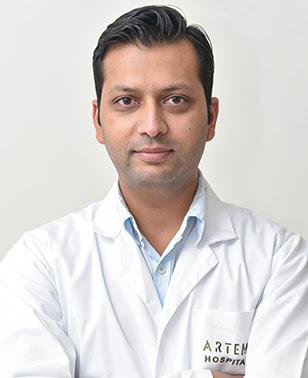
Dr. Nitin Shrivastava is a Uro-Oncologist and Robotic Surgeon practising at Apollo Hospital Gurugram. He holds an MCh in Urology from AIIMS Delhi (fewer than six seats nationally per year) and an FRCS in Urology from Oxford University, England. He performs robotic-assisted kidney cancer surgery (partial and radical nephrectomy), robotic prostatectomy, radical cystectomy for bladder cancer, and retroperitoneal lymph node dissection for testicular cancer using the Da Vinci Surgical System. Contact: +91 78382 86336.
When the word "cancer" enters the conversation, the next question is: who operates?
Urological cancers - kidney, bladder, prostate, testicular - are among the most common cancers in men globally. In India, incidence is rising, partly because people are living longer, partly because awareness and PSA testing have improved. The good news is that when detected early and operated by a skilled team, the cure rates are excellent.
What separates outcomes at this level is not the presence of a robot in the room. It is the surgeon's hands controlling it, the oncological precision with which margins are taken, and the intraoperative decisions that preserve function while removing disease.
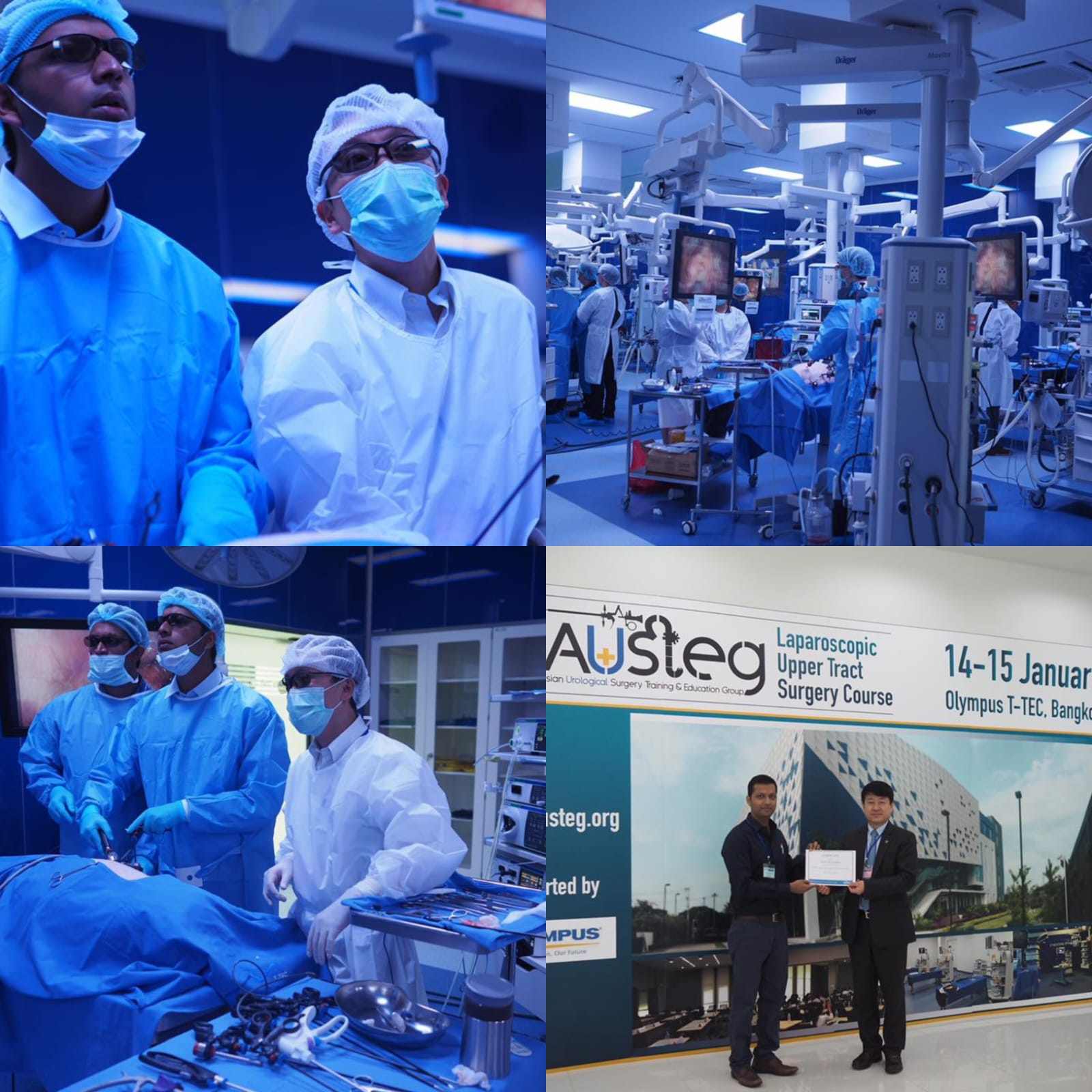
Dr. Nitin has trained at AIIMS Delhi - India's most competitive urology programme - and at Oxford, and has operated on several hundred urological cancer cases across his career.
This page explains each cancer type, what the surgical options are, and what you can expect from treatment at Apollo Hospital Gurugram. If you have already received a report or diagnosis, you can WhatsApp the document directly and the team will respond the same working day.
What we treat
Urological cancers - from diagnosis to surgery to follow-up
Kidney Cancer
Renal Cell Carcinoma (RCC)
Most kidney tumours are discovered incidentally on ultrasound or CT done for an unrelated reason. Smaller tumours (under 4 cm) are often suitable for nephron-sparing surgery - removing only the tumour while preserving the kidney. Larger tumours may require removal of the entire kidney (radical nephrectomy). Both are routinely performed robotically at Apollo Gurugram.
- Robotic partial nephrectomy (nephron-sparing)
- Robotic / laparoscopic radical nephrectomy
- Active surveillance for small, low-risk tumours
- Cytoreductive nephrectomy in metastatic disease
- Vena caval thrombus surgery
Bladder Cancer
Transitional Cell Carcinoma (TCC)
Blood in the urine should never be ignored. Bladder cancer accounts for most cases of painless haematuria in adults over 40. Superficial tumours are managed with TURBT (a bladder-sparing endoscopic procedure) and intravesical therapy. Muscle-invasive disease requires radical cystectomy - removal of the bladder - with urinary diversion. Dr. Nitin performs both robotic and laparoscopic cystectomy.
- Flexible cystoscopy & TURBT (bladder-sparing)
- Intravesical BCG and chemotherapy coordination
- Robotic radical cystectomy
- Ileal conduit and neobladder (urinary diversion)
- Upper-tract urothelial cancers (ureter, renal pelvis)
Prostate Cancer
Adenocarcinoma of the Prostate
Prostate cancer is the most common urological cancer in men. Localised disease is potentially curable. The approach depends on PSA level, Gleason score, age, and staging: active surveillance for very low-risk disease, robotic radical prostatectomy for those choosing surgery, or radiotherapy coordinated with oncology for others. Dr. Nitin focuses on nerve-sparing technique to preserve urinary continence and sexual function.
- Robotic radical prostatectomy (nerve-sparing)
- PSA screening and risk stratification
- Prostate biopsy (systematic and MRI-targeted)
- Active surveillance protocols
- Salvage surgery post-radiotherapy
Testicular Cancer & Others
Testicular, Adrenal & Upper Tract Cancers
Testicular cancer is the most common cancer in young men (20–35 years) - and also one of the most curable when caught promptly. A painless scrotal lump should be assessed by ultrasound immediately. Radical orchidectomy is both diagnostic and therapeutic. For advanced cases, retroperitoneal lymph node dissection (RPLND) may be required. Adrenal tumours (phaeochromocytoma, adrenocortical carcinoma) are also managed with minimally invasive adrenalectomy.
- Radical orchidectomy (testicular cancer)
- Retroperitoneal lymph node dissection (RPLND)
- Laparoscopic / robotic adrenalectomy
- Upper-tract urothelial cancer (ureteroscopy & nephroureterectomy)
- Penile cancer surgery
Why robotic surgery
Da Vinci robotic surgery - the international standard
The Da Vinci Surgical System is available at Apollo Hospital Gurugram. Robotic assistance gives the surgeon 10× magnified 3D vision, instruments that articulate with seven degrees of freedom (beyond the human wrist), and tremor-filtered precision movement.
For cancer surgery, this translates into narrower surgical margins (getting the cancer out completely), better preservation of surrounding structures (nerves, blood vessels, adjacent organs), less blood loss, and faster healing. For patients, it means smaller cuts, shorter hospital stay, and earlier return to normal life.
- Smaller incisions - less pain and scarring
- Precise tissue planes - better oncological margins
- Nerve-sparing - preserving continence & sexual function
- Less blood loss - often zero transfusions
- Shorter hospital stay - 1–3 days for most cases
- Faster return to work - 2–3 weeks vs. 6–8 weeks open
Why patients choose Dr. Nitin for cancer surgery
Patient experience
After a kidney cancer diagnosis: what recovery actually looked like
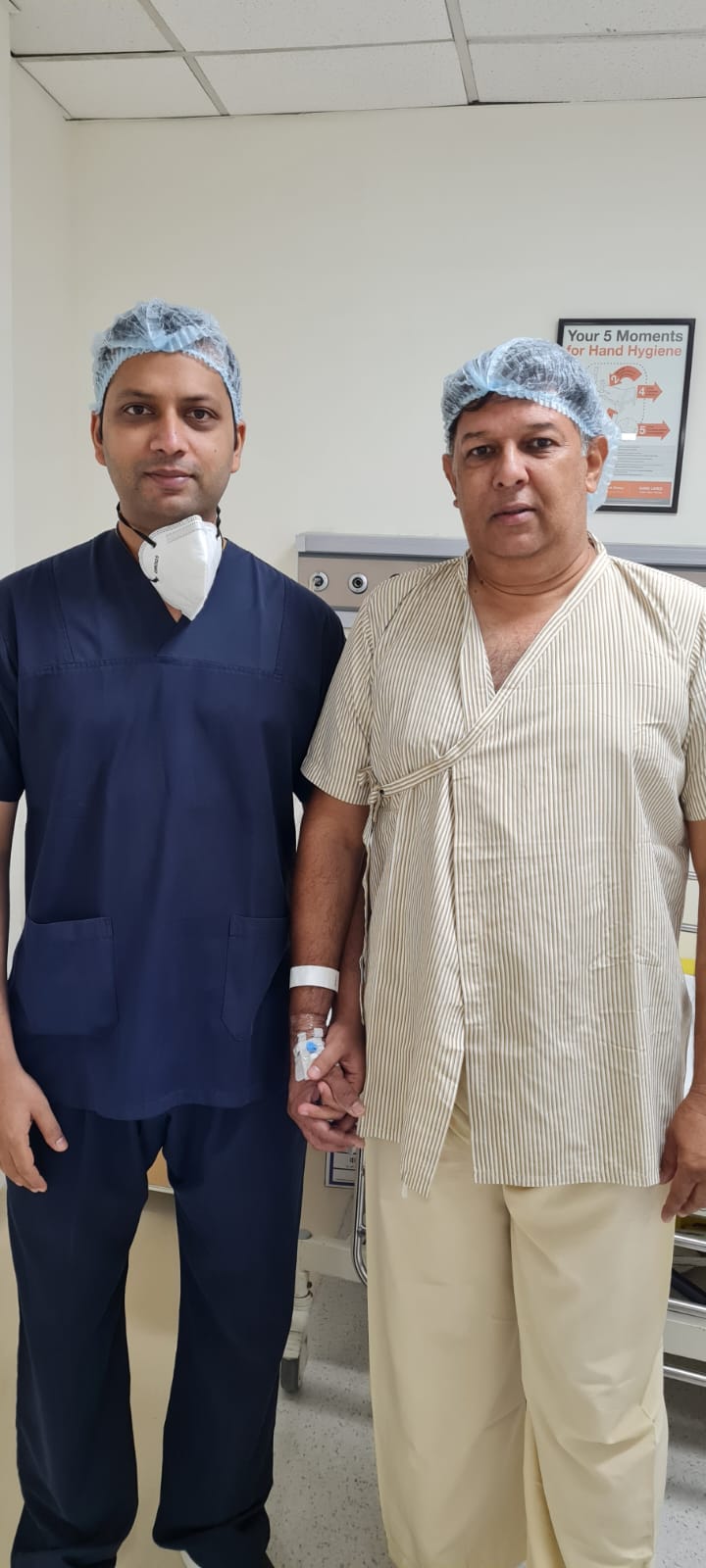
"When the CT scan came back showing a 5 cm mass on my kidney, I was terrified. A friend who is a doctor in Delhi told me to see Dr. Nitin - he said he was the person he would go to. The consultation was calm and detailed.
Dr. Nitin explained that a partial nephrectomy - removing only the tumour - was possible, and that the Da Vinci robot would make it precise. I was discharged on the third day. The pathology came back clear margins. I was back at work in three weeks."
- Patient, 54, kidney cancer · Gurgaon ★★★★★
When to come
Warning signs that need prompt assessment - not waiting
🔴 See a urologist this week
- Blood in urine - even once, even painless
- Painless testicular lump or hardening
- Rapidly rising PSA or PSA over 10
- CT scan showing a solid kidney mass
- Weight loss + urinary symptoms combined
- Bone pain with elevated PSA
🟡 Book a consultation within a month
- PSA consistently rising over annual checks
- Incidentally detected small kidney mass (<3 cm)
- Recurrent TURBT for bladder tumour - when is cystectomy needed?
- Post-radiotherapy PSA rising (biochemical recurrence)
- Strong family history of kidney, prostate or bladder cancer
- Second opinion before starting cancer treatment elsewhere
Early-stage urological cancers are highly treatable. Late-stage cancer caught late is a very different conversation. The gap is often a matter of weeks of delay.
Watch
Kidney Cancer & Uro-Oncology Surgery - Dr. Nitin Shrivastava

Your questions answered
Frequently asked questions - urological cancer surgery
Dr. Nitin treats the full spectrum of urological cancers: kidney cancer (renal cell carcinoma), bladder cancer (transitional cell carcinoma), prostate cancer, testicular cancer, and adrenal tumours. He also manages upper-tract urothelial cancers (ureteric and renal pelvis tumours), which are less common and require specialised expertise. For each cancer type, the treatment options - surgery, surveillance, or a combination with oncology - are discussed in detail at consultation.
Yes. Dr. Nitin Shrivastava performs robotic-assisted surgery using the Da Vinci Surgical System at Apollo Hospital Gurugram. For kidney cancer, robotic partial nephrectomy (removing only the tumour, preserving the rest of the kidney) is the gold-standard approach when technically feasible. For prostate cancer, robotic radical prostatectomy offers precise removal with better preservation of urinary control and sexual function compared to open surgery. Robotic surgery means smaller cuts, less blood loss, and faster return to normal life.
Not always - it depends on size, appearance on scan, your age, and overall health. Small kidney tumours (under 4 cm in many patients) can sometimes be monitored on active surveillance or treated with ablation rather than surgery. Tumours that are larger, growing, or have features suspicious for aggressive cancer typically need prompt surgery. The important thing is not to delay the assessment: a CT or MRI with contrast gives us a clear picture within days, and we will walk you through the findings and the options.
Blood in the urine - even once, even painless - is the cardinal warning sign of bladder cancer and should never be attributed to a UTI without investigation. Urinary urgency, frequency, and burning that does not resolve with antibiotics can also indicate bladder tumour. Risk is higher in smokers, those with occupational chemical exposure (dyes, rubber), and those over 50. A flexible cystoscopy (camera into the bladder under local anaesthetic) is the definitive investigation and can be arranged promptly.
Localised prostate cancer is confined within the prostate gland and is potentially curable with surgery (radical prostatectomy) or radiotherapy. Locally advanced prostate cancer has spread just beyond the prostate capsule but not to distant organs. Metastatic prostate cancer has spread to lymph nodes, bone, or other organs - at this stage, the treatment goal shifts from cure to long-term control with hormone therapy (ADT) and, increasingly, novel agents. PSA level, Gleason score from biopsy, and staging scans together determine which category a patient falls into.
This depends entirely on the cancer type, stage, and pathology of the removed specimen. For kidney cancer, surgery alone is often sufficient for localised disease; adjuvant (post-surgery) therapies are considered for high-risk cases. For bladder cancer, neoadjuvant chemotherapy before surgery and adjuvant immunotherapy are increasingly standard for muscle-invasive disease. For prostate cancer, adjuvant radiotherapy may be advised if the specimen shows certain high-risk features. Dr. Nitin works closely with a urological oncology multidisciplinary team to coordinate any additional treatments.
Robotic surgery dramatically shortens recovery compared to open surgery. After robotic kidney surgery (partial or radical nephrectomy), most patients are discharged within 2–3 days and return to desk work in 2–3 weeks. After robotic prostatectomy, hospital stay is 1–2 days with a urinary catheter for 7–10 days; desk work is typically possible within 2–3 weeks. Full physical recovery and return to strenuous activity takes 4–6 weeks for most patients. Individual timelines depend on age, fitness, and whether any complications occur.
Second opinion
Already diagnosed elsewhere? Get a specialist review before you commit.
A second surgical opinion from a dedicated Uro-Oncologist - especially for a cancer surgery decision - is not an insult to your current doctor. It is standard practice in any country with good cancer care. Send your reports, scan images and biopsy reports via WhatsApp. The team reviews and responds the same working day.
Book a consultation
Talk to Dr. Nitin Shrivastava - usually within one working day.
Share your concern below. Our team responds via WhatsApp or call on the same working day. For surgical second opinions, please attach your reports during the WhatsApp conversation that follows.
- 5★ Google · 450+ reviews
- MCh AIIMS Delhi · FRCS Oxford University, England
- Patients from Delhi NCR, Jaipur, Patna, Lucknow, Chandigarh & beyond
- Same-working-day response · No automated bots