Prostate & Bladder · Gurgaon
Prostate enlargement. Bladder cancer. OAB. Treated precisely.
Weak stream, frequent urination, urgency - or a more serious diagnosis of prostate or bladder cancer. Dr. Nitin Shrivastava offers the full range of prostate and bladder treatments at Apollo Hospital Gurugram and Six Sigma Clinics, Sector 50. MCh AIIMS Delhi · FRCS Oxford University, England · 15+ years · 5★ on Google.
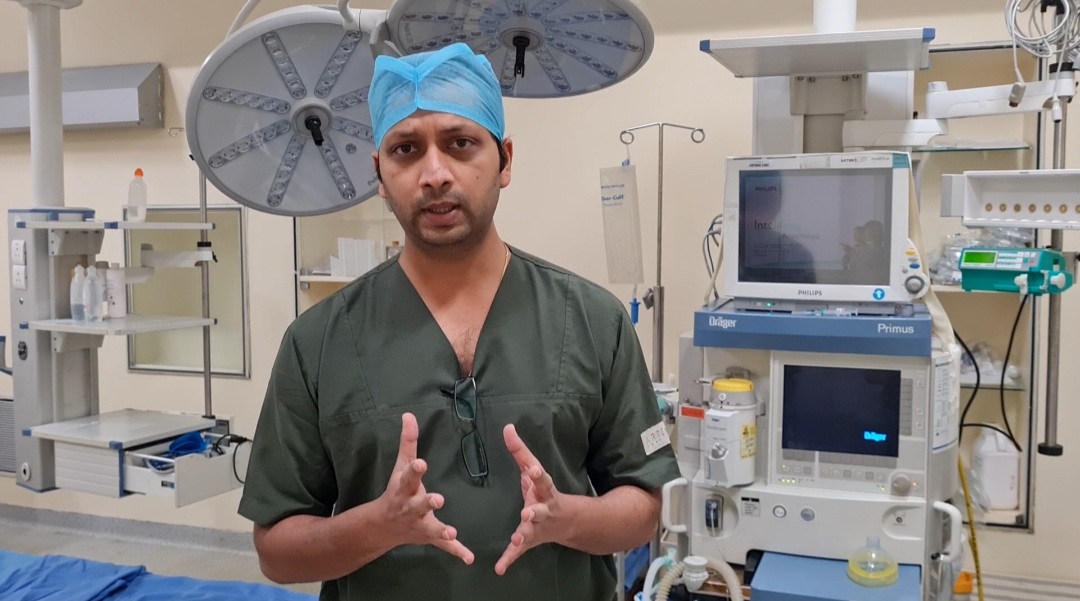
Dr. Nitin Shrivastava is a Senior Urologist at Apollo Hospital Gurugram and Six Sigma Clinics, Sector 50, specialising in prostate and bladder conditions. He treats BPH (prostate enlargement) with TURP and HoLEP laser surgery, prostate cancer with robotic radical prostatectomy, bladder cancer with TURBT and robotic radical cystectomy, and overactive bladder (OAB) with the full treatment pathway including Botox and neuromodulation. MCh AIIMS Delhi · FRCS Oxford · +91 78382 86336.
The prostate and bladder are behind more urology consultations than any other organ. Here is why.
In men over 50, prostate enlargement (BPH) affects more than half the population. In men over 70, it is closer to 90%. Yet many men spend years restricting fluids, waking three times at night, rushing to bathrooms, and quietly accepting it as ageing - when a simple assessment and a short course of medication, or a day-care surgical procedure, could restore normal life within weeks.
At the other end of the spectrum, prostate cancer is the most common cancer in men, and bladder cancer is the fourth most common. Caught early, both are very treatable. Left undetected - because a rising PSA was not followed up, or blood in the urine was explained away as a UTI - both can become much more serious.
This page covers the full range: from the mildly annoying (a slow stream that doesn't concern your GP) to the urgent (blood in the urine that needs investigation this week). If you are not sure which category your symptoms fall into, a 15-minute consultation will clarify things.
Conditions treated
Prostate and bladder - the full spectrum
Benign Prostatic Hyperplasia (BPH)
Prostate enlargement · LUTS
BPH is the non-cancerous enlargement of the prostate gland. As the prostate grows, it compresses the urethra, causing the classic symptoms: a slow, interrupted stream; straining to start; a feeling of incomplete emptying; urgency; frequency; and waking at night to urinate. Untreated, it can progress to acute urinary retention (sudden inability to pass urine) or bladder damage from chronic pressure.
- Uroflowmetry + post-void residual ultrasound
- Medical management (alpha-blockers, 5-ARI, combination)
- TURP (Transurethral Resection of the Prostate)
- HoLEP (Holmium Laser Enucleation) - for large prostates
- Acute urinary retention management (catheter + surgery)
Prostate Cancer
PSA screening · Biopsy · Surgery · Surveillance
Prostate cancer often causes no symptoms in its early, curable stages - it is found through a PSA blood test or rectal examination. The treatment for localised prostate cancer is surgery (robotic radical prostatectomy), radiotherapy, or in very low-risk cases, active surveillance. Dr. Nitin performs nerve-sparing robotic prostatectomy at Apollo Gurugram - the technique that best preserves urinary continence and sexual function.
- PSA testing and risk stratification
- mpMRI and targeted prostate biopsy
- Robotic radical prostatectomy (nerve-sparing)
- Active surveillance (low-risk disease)
- Coordination with oncology for radiotherapy/ADT
- Salvage prostatectomy post-radiotherapy
Bladder Cancer
TURBT · Intravesical therapy · Cystectomy
Blood in the urine is bladder cancer until proven otherwise. Most bladder cancers are superficial and can be managed with cystoscopy and TURBT (removal of visible tumour through the camera), followed by BCG or chemotherapy instilled into the bladder. Muscle-invasive disease requires radical cystectomy. Dr. Nitin performs robotic cystectomy and creates both ileal conduit (urostomy bag) and neobladder (internal reservoir) diversions.
- Flexible cystoscopy (OPD procedure)
- TURBT (transurethral resection of bladder tumour)
- Intravesical BCG and chemotherapy
- Robotic radical cystectomy
- Ileal conduit and orthotopic neobladder
- Surveillance cystoscopy programme
Overactive Bladder (OAB) & Incontinence
Urgency · Frequency · Nocturia · Urgency incontinence
Overactive bladder (OAB) causes a sudden urge to urinate that is hard to suppress, frequent trips to the bathroom, and often leakage before reaching the toilet. It is extremely common and - crucially - very treatable. Dr. Nitin manages the full OAB pathway from conservative treatment through to bladder Botox injection and sacral neuromodulation for refractory cases. Stress urinary incontinence (leaking on coughing, sneezing, or exercise) is managed with pelvic floor rehabilitation and surgical options including mid-urethral slings.
- Bladder diary + urodynamics assessment
- Pelvic floor physiotherapy referral
- Anticholinergic / beta-3 agonist medication
- Intravesical Botox injection (day case)
- Sacral neuromodulation
- Mid-urethral sling for stress incontinence
PSA testing · Gurgaon
Understanding your PSA number - what it means and what to do next
PSA (Prostate-Specific Antigen) is a protein produced by prostate cells. A raised PSA does not automatically mean cancer - BPH, prostatitis, and even vigorous cycling can elevate it. What matters is the trend over time, the PSA density (PSA adjusted for prostate volume), and the free-to-total PSA ratio.
The modern approach to an elevated PSA is not a blind biopsy. It is an mpMRI of the prostate first - which detects clinically significant cancer with high accuracy - followed by a targeted biopsy of any suspicious areas. This approach finds more significant cancer and misses less of it, while avoiding unnecessary biopsies of insignificant lesions.
These are general guidelines. Your individual assessment takes age, prostate volume, and history into account.
Treatment guide
The main procedures - explained simply
TURP
Transurethral Resection of Prostate
Gold-standard BPH surgery for moderate prostates. Electrical resection through the urethra - no cuts. Usually 1–2 night hospital stay. Dramatic improvement in urinary flow.
BPH · Day / overnightHoLEP
Holmium Laser Enucleation of Prostate
Laser-based enucleation (complete removal of inner prostate). Treats prostates of any size. Lower recurrence rate than TURP. Preferred for very large prostates or anticoagulated patients.
BPH · 1–2 nightsTURBT
Transurethral Resection of Bladder Tumour
Camera through the urethra to remove visible bladder tumours. Diagnostic and therapeutic in one procedure. Most superficial bladder cancers are managed this way. Day-care or overnight.
Bladder cancer · Day caseRobotic Prostatectomy
Radical Prostatectomy - Da Vinci
Complete removal of the prostate for localised cancer. Nerve-sparing technique preserves continence and sexual function. Discharged day 1–2. Catheter for 7–10 days.
Prostate cancer · 1–2 nightsRobotic Cystectomy
Radical Cystectomy - Da Vinci
Bladder removal for muscle-invasive cancer. Urinary diversion created simultaneously (conduit or neobladder). Robotic technique reduces blood loss and speeds recovery vs. open.
Bladder cancer · 5–7 nightsBladder Botox
Intravesical Botulinum Toxin
Injected directly into the bladder muscle through a cystoscope under local anaesthetic. Relaxes overactive detrusor muscle. Highly effective for refractory OAB and urgency incontinence.
OAB · Day case
Your questions answered
Frequently asked questions - prostate & bladder
Benign Prostatic Hyperplasia (BPH) is a non-cancerous enlargement of the prostate that is extremely common in men over 50. It causes the classic LUTS (lower urinary tract symptoms): a weak urinary stream, difficulty starting to urinate, a need to strain, incomplete bladder emptying, frequent trips to the bathroom at night (nocturia), and urgency. BPH does not become prostate cancer - they are separate conditions - but both can coexist. Treatment is considered when symptoms significantly affect quality of life, when urine flow studies show severe obstruction, when the bladder is not emptying properly (raised post-void residual), or when complications arise (recurrent UTI, bladder stones, urinary retention). Many mild cases are managed with lifestyle measures and medication (alpha-blockers, 5-alpha reductase inhibitors). Surgery is recommended when medication fails or complications develop.
TURP (Transurethral Resection of the Prostate) has been the gold standard for BPH surgery for decades. A resectoscope passes through the urethra and chips away prostate tissue with electrical current. It is highly effective for moderate-sized prostates. HoLEP (Holmium Laser Enucleation of the Prostate) is a newer laser technique that can treat prostates of any size - including very large glands where TURP is less suitable. HoLEP involves removing the entire inner portion of the prostate (enucleation), which means lower recurrence rates. Both are performed without any external cuts. Dr. Nitin will recommend the appropriate procedure based on your prostate size, flow studies, and overall health.
Not necessarily. PSA (Prostate-Specific Antigen) is produced by the prostate gland itself, not by cancer alone. BPH, prostatitis (prostate infection or inflammation), and recent sexual activity, vigorous cycling or a urinary catheter can all elevate PSA. However, a consistently elevated PSA, or one that is rising rapidly over serial tests, warrants investigation. The PSA level, its rate of change (PSA velocity), the PSA density (PSA relative to prostate volume), and the free-to-total PSA ratio together give a much clearer risk picture than a single number. If the assessment suggests significant risk, a prostate MRI (mpMRI) and then a targeted biopsy - rather than a blind systematic biopsy - is the modern approach Dr. Nitin follows.
A prostate biopsy involves taking small tissue samples from different parts of the prostate through a thin needle, which is guided by ultrasound and increasingly by MRI targeting. The procedure is typically performed under local anaesthetic as a day procedure. Modern mpMRI-guided (fusion) biopsy focuses sampling on the suspicious area identified on MRI, which improves cancer detection while reducing the number of unnecessary cores. After the biopsy, the tissue goes to pathology and results are usually available within 7–10 days. Temporary blood in the urine, stool and semen is normal for a few days to weeks. Serious complications are uncommon but include infection - always disclosed and managed with prophylactic antibiotics.
Bladder-preserving treatment is possible for some patients. Superficial (non-muscle-invasive) bladder cancer - which makes up approximately 75% of new diagnoses - is managed with TURBT (a camera procedure that removes visible tumour through the urethra) followed by intravesical BCG or chemotherapy instilled directly into the bladder. These patients keep their bladder and are followed with regular cystoscopy. However, once cancer invades the bladder muscle (muscle-invasive bladder cancer), the standard treatment is radical cystectomy - removal of the bladder - with urinary diversion. Bladder-sparing chemoradiotherapy is an alternative in specific patients who are not suitable for surgery. Dr. Nitin will discuss all options with a multidisciplinary team.
The following symptoms need a urology assessment - not just a course of antibiotics: blood in the urine (haematuria) - even once, even painless; inability to pass urine at all (acute urinary retention) - emergency; a markedly weak urinary stream with straining; recurrent urinary tract infections (more than two per year); pain in the lower abdomen or pelvis combined with urinary symptoms; nighttime urination that has recently worsened dramatically; and any urinary change that has developed in a man over 50. These symptoms could represent BPH, bladder cancer, prostate cancer, or other treatable conditions - all of which benefit from early assessment.
Overactive bladder is a syndrome characterised by a sudden, compelling urge to urinate that is difficult to suppress (urgency), often with frequency (urinating more than 8 times per day) and nocturia. It may or may not be accompanied by urgency incontinence (leaking on the way to the toilet). OAB is common in both men and women and is typically caused by involuntary contractions of the bladder muscle (detrusor overactivity). First-line treatment is bladder retraining, fluid management, and pelvic floor exercises. Second-line treatment includes anticholinergic or beta-3 agonist medications. For refractory cases, Botox injection into the bladder or sacral neuromodulation offers significant relief. Dr. Nitin manages the full OAB pathway.
Book a consultation
Urinary symptoms that bother you deserve a proper answer.
Whether it is a slow stream that has been building for years, a PSA result from your health check, or blood in the urine that you are worried about - a 20-minute consultation clarifies things. Most people leave with a diagnosis and a plan the same day.
Book a consultation
Talk to Dr. Nitin Shrivastava - usually within one working day.
Share your concern below. Our team responds via WhatsApp or call on the same working day. For surgical second opinions, please attach your reports during the WhatsApp conversation that follows.
- 5★ Google · 450+ reviews
- MCh AIIMS Delhi · FRCS Oxford University, England
- Patients from Delhi NCR, Jaipur, Patna, Lucknow, Chandigarh & beyond
- Same-working-day response · No automated bots